Embark on a journey through the world of Health Information Technology and its pivotal role in shaping the future of healthcare in 2025. From innovative tools to emerging trends, this topic covers it all in a captivating manner.
Delve into the realm of health information technology and discover the transformative power it holds for patient care and healthcare delivery.
What Is Health Information Technology?
Health Information Technology (HIT) refers to the use of technology in managing and exchanging health information. It involves the electronic storage, retrieval, and sharing of patient health information to improve healthcare delivery and outcomes.
Role of Health Information Technology in Healthcare
- Electronic Health Records (EHRs): EHRs are digital versions of patients' paper charts, containing medical history, diagnoses, medications, treatment plans, immunization dates, allergies, radiology images, and laboratory test results. They streamline healthcare processes and enhance patient care by providing comprehensive and up-to-date information.
- Telemedicine: Telemedicine allows healthcare professionals to evaluate, diagnose, and treat patients remotely using telecommunications technology. It improves access to care, especially for patients in rural or underserved areas.
- Health Information Exchange (HIE): HIE enables the secure sharing of patient information between different healthcare providers, ensuring coordinated and efficient care delivery. It eliminates the need for redundant tests and reduces medical errors.
Benefits of Health Information Technology in Improving Patient Care
- Enhanced Patient Safety: HIT systems help reduce medication errors, improve diagnosis accuracy, and ensure timely access to critical information, ultimately enhancing patient safety.
- Improved Care Coordination: By enabling seamless communication among healthcare providers, HIT systems facilitate better care coordination, leading to more comprehensive and personalized treatment plans for patients.
- Efficiency and Cost Savings: Automation of administrative tasks, such as appointment scheduling and billing, increases operational efficiency and reduces healthcare costs. Additionally, improved data management leads to better resource utilization.
Importance of Health Information Technology in 2025
Health Information Technology (HIT) is poised to play a crucial role in shaping the future of healthcare delivery by 2025. The advancements in technology are expected to revolutionize the way healthcare services are provided and accessed.
Evolution of Health Information Technology
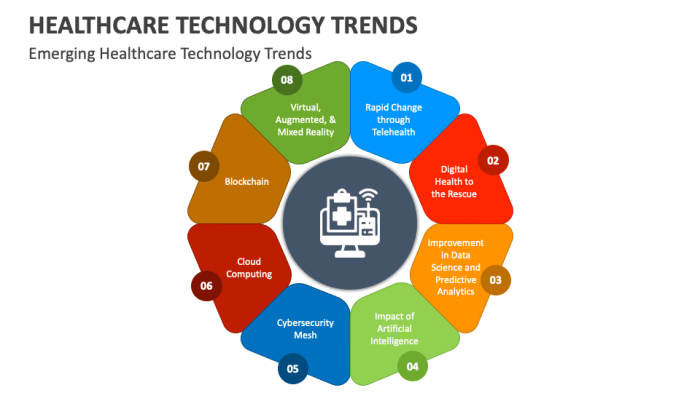
- Integration of Artificial Intelligence: AI will enhance diagnostic accuracy, personalize treatment plans, and optimize administrative processes.
- Telehealth Expansion: Remote patient monitoring and virtual consultations will become more common, improving access to care, especially in rural areas.
- Blockchain Implementation: Secure sharing of patient data across healthcare systems will ensure privacy and interoperability.
Impact of Technological Advancements on Healthcare
- Improved Patient Outcomes: Data-driven insights and predictive analytics will enable proactive healthcare interventions, leading to better outcomes.
- Enhanced Efficiency: Automation of routine tasks will streamline operations, reducing administrative burden and allowing healthcare professionals to focus on patient care.
- Cost Savings: By optimizing processes and reducing errors, HIT can lower healthcare costs and make services more affordable and accessible.
Key Trends Shaping the Future of Health Information Technology
- Interoperability: Seamless data exchange between different healthcare systems to provide a comprehensive view of patient information.
- Focus on Cybersecurity: With the increasing digitization of healthcare data, robust cybersecurity measures are essential to protect patient privacy.
- Patient-Centric Care: Empowering patients with access to their health data and involving them in decision-making processes for personalized care.
Challenges and Opportunities
Implementing health information technology comes with its own set of challenges and opportunities that can significantly impact the healthcare industry.
Challenges Faced by Health Information Technology Implementation
When it comes to implementing health information technology, several challenges need to be addressed:
- Resistance to change from healthcare professionals who are used to traditional paper-based systems.
- High initial costs associated with acquiring and implementing health IT systems.
- Interoperability issues between different systems and platforms, leading to data silos.
- Concerns regarding data security and privacy, especially with the rise in cyber threats.
- Lack of standardized processes and protocols for sharing and exchanging health information.
Opportunities for Innovation and Growth in the Health IT Sector
The challenges mentioned above also present opportunities for innovation and growth in the health IT sector:
- Development of user-friendly and intuitive health IT systems to improve adoption rates among healthcare professionals.
- Integration of artificial intelligence and machine learning algorithms to enhance clinical decision-making and patient outcomes.
- Increased focus on telehealth and remote patient monitoring solutions to expand access to healthcare services.
- Advancements in data analytics and predictive modeling for personalized medicine and population health management.
Importance of Data Security and Privacy in Health Information Systems
Data security and privacy are paramount in health information systems to protect sensitive patient information:
- Adherence to strict regulations such as HIPAA to safeguard patient data from unauthorized access or breaches.
- Implementation of encryption and other security measures to ensure data integrity and confidentiality.
- Regular security audits and assessments to identify and address vulnerabilities in health IT systems.
Comparison of Adoption Rates of Health Information Technology
The adoption rates of health information technology vary across different healthcare settings:
- Hospitals and large healthcare systems tend to have higher adoption rates due to the availability of resources and infrastructure.
- Small medical practices and rural healthcare facilities may face challenges in adopting health IT systems due to limited budgets and technical expertise.
- Ambulatory care settings and community health centers are gradually increasing their use of health IT to improve patient care coordination and outcomes.
Role of Artificial Intelligence in Health Information Technology
Artificial intelligence (AI) plays a pivotal role in revolutionizing health information technology by enhancing data management, analysis, and decision-making processes in healthcare. AI algorithms have the capability to process vast amounts of data at a speed and accuracy that surpasses human capabilities, making it a valuable tool in the healthcare industry.
AI Applications in Healthcare Data Management
- AI-powered predictive analytics can help in identifying patterns and trends in patient data to predict potential health issues or outcomes.
- Machine learning algorithms can assist in diagnosing diseases by analyzing medical images such as X-rays and MRIs with high precision.
- Natural language processing (NLP) technology enables the extraction of valuable insights from unstructured clinical notes and documentation.
Potential Benefits and Risks of Integrating AI
- Benefits:
- Improved accuracy and efficiency in diagnosis and treatment planning.
- Enhanced personalized medicine through data-driven insights.
- Streamlined administrative processes for better patient care.
- Risks:
- Potential biases in AI algorithms leading to incorrect decisions.
- Data privacy and security concerns regarding the protection of sensitive patient information.
- Dependency on AI technology may reduce the human touch in healthcare delivery.
Ethical Considerations in AI Use in Healthcare
- Ensuring transparency and accountability in AI decision-making processes to maintain trust in the system.
- Addressing concerns about AI replacing healthcare professionals and the ethical implications of such a scenario.
- Protecting patient privacy and confidentiality while utilizing AI technologies for data analysis.
Closing Notes
As we conclude this exploration of Health Information Technology in 2025, it becomes evident that this field is poised for remarkable growth and evolution. The future holds endless possibilities for innovation and advancement in healthcare through the integration of technology.
Questions and Answers
What are the key benefits of Health Information Technology?
Health Information Technology plays a crucial role in enhancing patient care, improving efficiency in healthcare delivery, and facilitating better communication among healthcare providers.
How is Health Information Technology expected to evolve by 2025?
By 2025, Health Information Technology is anticipated to become more integrated, user-friendly, and focused on data analytics to drive better decision-making in healthcare.
What challenges are faced in the implementation of Health Information Technology?
Challenges include interoperability issues, data security concerns, and resistance to adopting new technologies among healthcare professionals.
What role does Artificial Intelligence play in Health Information Technology?
Artificial Intelligence is revolutionizing Health Information Technology by enabling predictive analytics, personalized medicine, and automation of routine tasks to enhance patient outcomes.